Discover the Apex Woodpecker Habitat and Behavior in China Top Regions?
The apex woodpecker is a fascinating species found in some of China's most diverse habitats. These woodpeckers thrive in regions that combine dense forests with rich insect life. Their behavior is characterized by unique foraging techniques, showcasing their adaptability in various environments.
In the lush areas of Southeast Asia, you can observe the apex woodpecker drilling into tree bark. This method reveals their hunting skills and role in the ecosystem. However, habitat loss threatens their populations. Conservation efforts are critical in preserving their natural environments and future.
Exploring the apex woodpecker's habitat allows us to appreciate the beauty and complexity of these regions. It raises awareness about the species' challenges and the importance of biodiversity. Understanding their behavior helps in creating effective conservation strategies. We can contribute to safeguarding this remarkable bird, but there is always more we can learn.

Apex Woodpecker: Overview of Species Characteristics in China
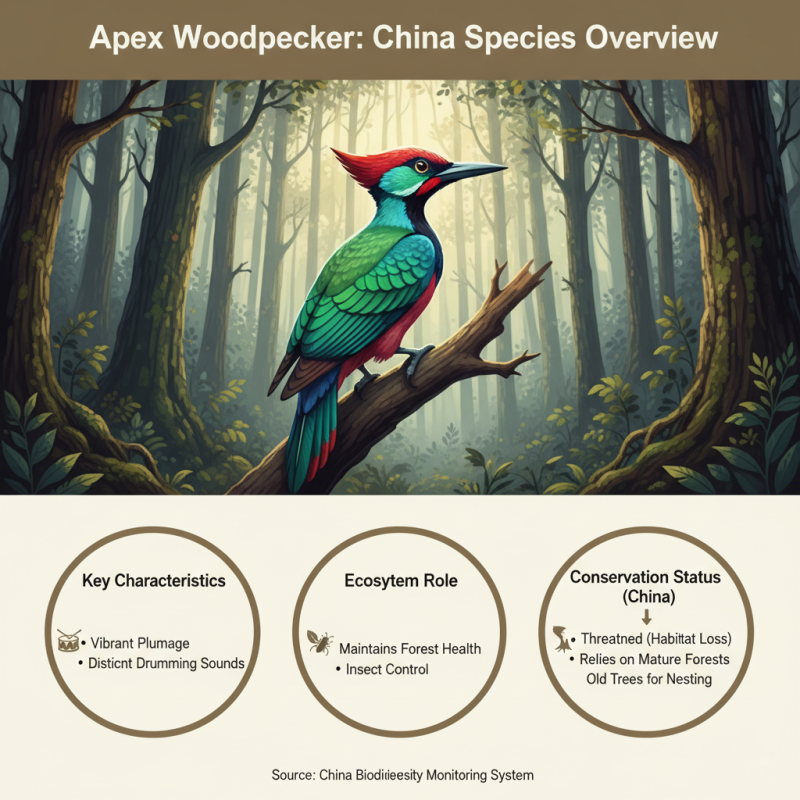
The Apex Woodpecker, a striking species found in China, exhibits unique characteristics worthy of exploration. Known for its vibrant plumage and drumming sounds, it plays a crucial role in maintaining forest ecosystems. According to the China Biodiversity Monitoring System, habitat loss threatens many woodpecker species, including the Apex. The bird thrives in mature forests with abundant insects, preferring regions where old trees provide nesting sites.
Behaviorally, the Apex Woodpecker is known for its incredible drilling ability. It taps on tree trunks to find food, which mainly consists of wood-boring beetles and larvae. Research by the Institute of Zoology, Chinese Academy of Sciences, indicates that these woodpeckers can consume up to 8,000 insects in a year, making them vital for pest control. They are social creatures, often seen foraging in pairs or small groups.
However, despite their resilience, the Apex Woodpecker faces challenges. Habitat encroachment and deforestation have led to declining populations. Conservation efforts are underway, yet progress is slow. Ecologists emphasize the need for awareness and protection of these birds. Without immediate action, the future of the Apex Woodpecker remains uncertain, reflecting the broader biodiversity crisis in China.
Geographical Regions in China with Ideal Apex Woodpecker Habitats
The apex woodpecker, a remarkable bird, thrives in specific regions of China.
These areas provide essential habitat features. Their survival relies on old-growth forests, rich in mature trees. Particularly, the mountainous regions of Sichuan and Yunnan stand out. Here, diverse ecosystems offer abundant food sources and nesting sites.
In the lush forests of these provinces, the woodpecker finds its ideal home. The dense canopy protects them from predators. Moreover, the variety of insects within the bark aids in their feeding. Observers often note how these woodpeckers drum against trees, creating distinct rhythms. This not only attracts mates but also marks territory.
However, not all habitats are suitable. Deforestation threatens their existence. Many habitats are fragmenting, leading to isolation. New conservation efforts are vital in these regions. Education is equally important. Raising awareness about their role in ecosystems can help protect these birds. Every small step counts in preserving their natural habitat.
Key Environmental Factors Influencing Apex Woodpecker Behavior
The Apex Woodpecker thrives in diverse habitats across China, particularly in mountainous regions and dense forests. These birds require old trees, which provide ample resources for nesting and feeding. Their preferred environment includes a mix of broadleaf and coniferous trees. This variety supports their lifestyle, ensuring they have access to both insects and wood.
Several environmental factors significantly influence the behavior of the Apex Woodpecker. Temperature fluctuations can determine their feeding patterns. During colder months, they seek warmer microclimates in trees. Rainfall patterns affect insect availability. In dry seasons, these woodpeckers are forced to travel further to find food. Thus, their adaptability is essential for survival.
Habitat destruction poses a threat to these birds. Deforestation reduces their nesting sites. Also, urbanization disrupts their feeding grounds. While some woodpeckers adapt, many struggle to thrive in altered landscapes. Conservation efforts focus on preserving natural habitats. However, the balance between development and preservation remains delicate, requiring ongoing reflection and action.
Dietary Preferences and Foraging Strategies of Apex Woodpeckers
The Apex Woodpecker thrives in diverse habitats across China. These woodpeckers are often found in crowded forests, where mature trees dominate. They prefer regions with ample dead wood, which offers great foraging opportunities. The dense canopy provides them with shelter and an abundance of insects, their primary food source.
Apex Woodpeckers exhibit unique foraging strategies. They use their strong beaks to drill into bark and create cavities. This behavior helps them extract larvae and insects hiding within. Fascinatingly, they can adjust their foraging techniques based on the tree species they encounter. For instance, they might forage differently on softwood compared to hardwood. Interestingly, their preference for certain insects reflects their adaptability. Not all woodpeckers will take the same route when searching for food, showcasing their individual foraging styles.
Their feeding habits reveal much about their environment.
As they consume pests, they help maintain ecological balance. However, in areas where habitat is compromised, finding food becomes challenging. Observing these woodpeckers can raise questions about their resilience. Are they adapting quickly enough to support their populations in changing environments? This complexity adds to the allure of the Apex Woodpecker.
Conservation Status and Threats Facing Apex Woodpecker Populations in China
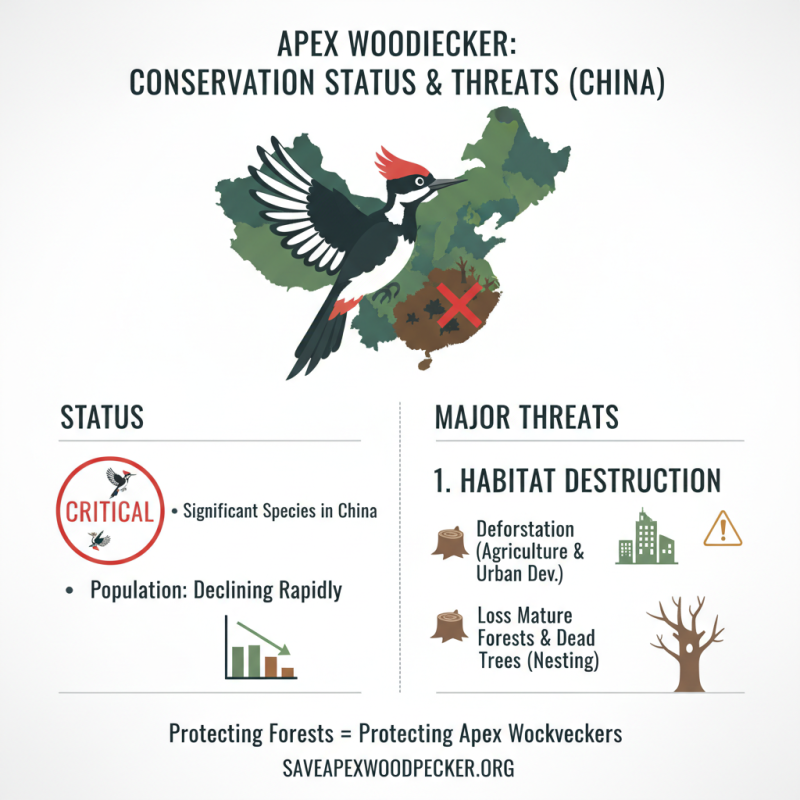
The Apex Woodpecker, a significant species in China, faces critical conservation challenges. Habitat destruction poses the greatest threat to its population. Deforestation for agriculture and urban development has drastically reduced suitable environments. These birds require mature forests with ample dead trees for nesting. Without these conditions, their chances of survival diminish substantially.
Pollution also impacts the Apex Woodpecker negatively. Chemical runoff from farming taints their food supply, affecting health and reproduction. Climate change introduces further challenges, altering habitats and food availability. Their adaptability is tested as environments shift. This vulnerability indicates a need for targeted conservation efforts.
Conservation initiatives must focus on preserving forest ecosystems. Engaging local communities could foster sustainable practices. Education about the Apex Woodpecker’s role in biodiversity is crucial. It is important to recognize that without addressing these threats, we risk losing this remarkable species. Reflecting on our impact may encourage change. Ensuring a future for the Apex Woodpecker requires collective responsibility.