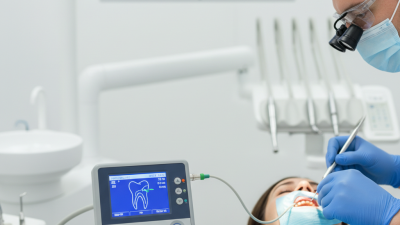
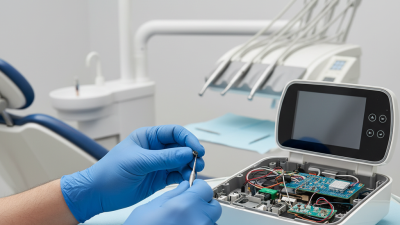
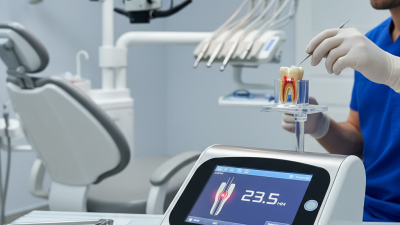
The dental industry is rapidly evolving, particularly in the realm of endodontics. The development of apex locator generation technology is at the forefront of this innovation. According to a recent report by the American Dental Association, the accuracy of apex locators has improved significantly, boasting up to 95% accuracy rates in locating the apex of the tooth. This highlights the importance of these devices in enhancing patient outcomes.
Dr. Emily Chen, a leading expert in dental technology, states, "The new apex locator generation is redefining precision in root canal treatments." This statement underscores the growing reliance on advanced technology within dental practices. As practitioners seek to improve their clinical efficiency, the demand for state-of-the-art apex locators is increasing.
However, some challenges remain in this evolving landscape. Not all dental offices are equipped with the latest technology, leading to inconsistent practices. Moreover, as with any technology, training is crucial for effective use. Therefore, while the advances in apex locator generation bring hope for improved patient care, ongoing education and accessibility are essential for maximizing their potential.
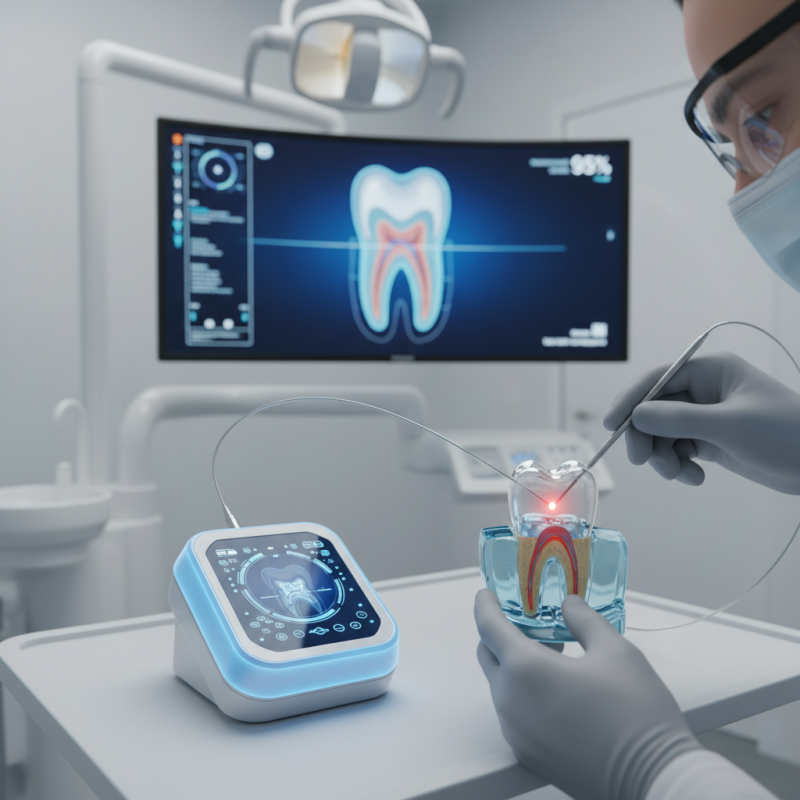
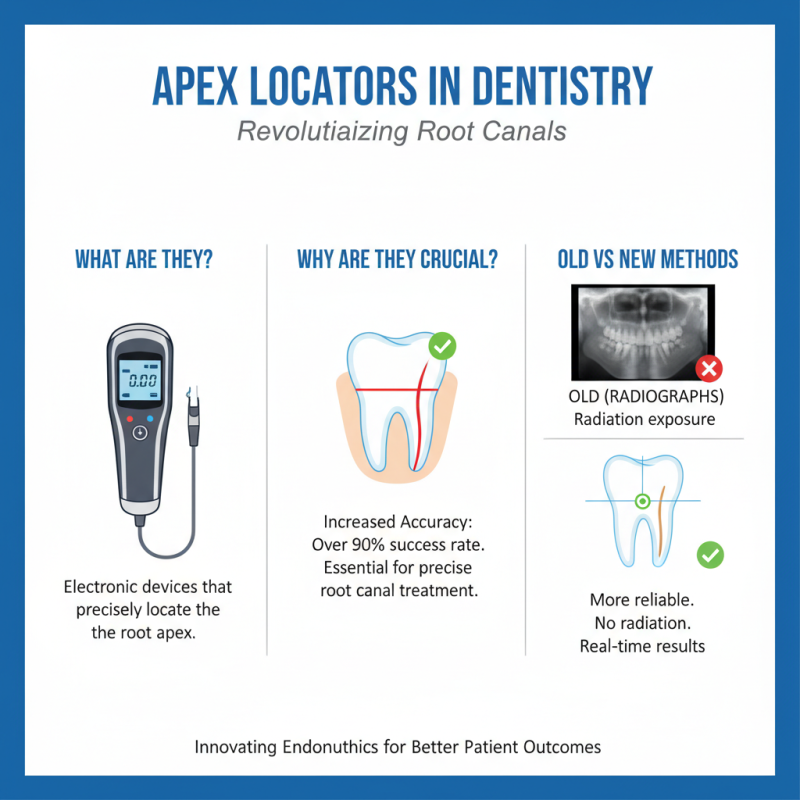
Apex locators have revolutionized endodontics in recent years. These devices help dental professionals determine the precise location of the apex of a tooth during root canal treatments. Reports indicate that accuracy is crucial; studies show that apex locators can increase the success rate of these procedures to over 90%. Historically, methods relied heavily on radiographs, which may not always provide reliable results.
Recent advancements in apex locator technology have introduced features like frequency-based and impedance-based systems. These innovations enhance real-time tracking of the root canal's anatomy, leading to more effective treatments. The use of digital imaging combined with apex locator technology is a growing trend. Data suggests that practices utilizing these tools can improve overall patient outcomes and satisfaction.
While these devices offer many benefits, some concerns remain. For example, factors such as canal complexity and the presence of certain materials can impact accuracy. Ongoing research highlights the importance of understanding these limitations. Not every dental practice may achieve the same results with apex locators, underscoring the need for continuing education and the evaluation of equipment performance in different clinical scenarios.
Apex locator technology has evolved significantly over the years, enhancing the precision of root canal treatments. This progression began with rudimentary devices that relied heavily on manual calculations. These early tools were often inaccurate and could lead to complications during procedures. Many practitioners found themselves uncertain about their effectiveness.
As technology advanced, newer generations of apex locators emerged. They incorporated electronic feedback, allowing for real-time measurements. This development improved precision dramatically, making treatments faster and safer. Dentists began to trust these electronic devices, as they provided consistent results. However, the integration of these advanced tools has not been without challenges. Some practitioners still grapple with understanding the nuances of more complex devices.
The latest innovations promise even greater accuracy and user-friendliness. New features include wireless connectivity and integration with digital imaging systems. These enhancements aim to streamline workflows and improve patient outcomes. However, not everyone has adapted quickly to these changes. Some practitioners remain hesitant to abandon traditional methods. This hesitation may stem from a fear of technology or the need for continuing education. The journey of apex locator technology reflects not just advancement, but the need for ongoing reflection and adaptation in dental practices.
In 2026, apex locators are set to revolutionize dental practices.
The latest models feature advanced technology that enhances accuracy in root canal procedures. Dentists can expect precise length measurements, reducing the risk of over-preparation or missed canals. This precision is achieved through improved digital sensors that respond instantaneously to changes in resistance.
Key features of these apex locators include:
However, the advancements also bring complexity. Training may be necessary to fully utilize the features, which could lead to adjustment periods for staff.
Another noteworthy aspect is their safety enhancements.
Many apex locators are equipped with alerts for environmental changes, such as moisture or debris interference. Yet, users must remain vigilant. Calibration and maintenance are crucial to ensure reliable performance.
In some cases, over-reliance on technology can lead to complacency, which may compromise outcomes. Engaging with these tools thoughtfully will be essential in harnessing their full potential.
In modern dental practices, advanced apex locator technology significantly enhances treatment precision. These devices provide reliable measurements of the root canal length. By ensuring accuracy, they drastically reduce the risk of over-instrumentation. This precise guidance is essential for effective endodontic treatment.
Integrating the latest apex locator technology offers several benefits. Dentists can perform procedures with greater confidence. This not only improves patient outcomes but also elevates overall satisfaction. Patients appreciate fewer discomforts and quicker procedures. The incorporation of these tools can streamline workflows and enhance operational efficiency.
Tip: Regularly update your technology to stay current. Research shows that newer models can offer better accuracy and usability.
In pursuit of perfection, practitioners may occasionally struggle with the learning curve of advanced devices. A commitment to training and practice is crucial for maximizing the potential of apex locators. Embracing feedback and continuously evaluating performance keeps dental practices at the forefront of endodontic care.
The development of apex locators has been crucial for dental practices, enhancing treatment accuracy. In recent years, technology has evolved significantly. According to a report from the Journal of Endodontics, 90% of dentists confirm that electronic apex locators improve endodontic outcomes. This statistic underscores the growing reliance on technology in root canal procedures.
Future trends hint at even smarter devices. New apex locators will likely integrate artificial intelligence, providing real-time feedback to practitioners. This could enable more precise measurements and reduce the risk of procedural errors. As reported by Dental Economics, approximately 75% of endodontists believe that AI can further enhance their diagnostic capabilities. However, the integration of such technology brings challenges, including the need for training and adaptation.
Moreover, as practices strive for digital transformation, data security and patient privacy remain significant concerns. The reliance on cloud-based technology raises questions about protecting sensitive information. According to the American Dental Association, only about 40% of dental practices have robust cybersecurity measures in place. Balancing innovation with security will be essential for future advancements in apex locator technology.
DENTSPLY Maillefer - USA
5100 E. Skelly Drive, Suite 300
Tulsa, Oklahoma 74135
DENTSPLY Maillefer - Canada
161 Vinyl Court
Woodbridge, ON L4L 4A3
Toll-free in the U.S.:
1-800-924-7393
Toll-free in Canada:
1-800-263-1437
Toll-free in the U.S.:
1-800-924-7389
Toll-free in Canada:
1-888-336-8775