How to Use An Apex Locator in Root Canal Treatment?
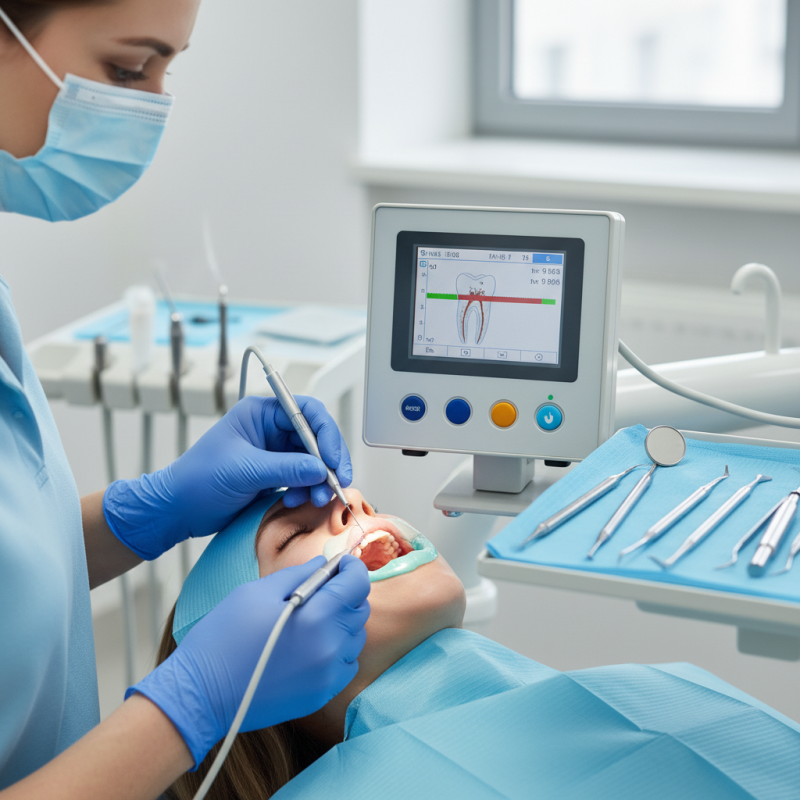
Using an apex locator in root canal treatment can significantly enhance the accuracy and effectiveness of the procedure. An apex locator is a specialized device that helps determine the exact location of the tooth's apex. This information is crucial when cleaning and shaping the root canal.
While the use of apex locators is generally beneficial, some challenges may arise. For instance, factors like canal curvature and tooth anatomy can affect the readings. It’s essential to remain attentive and interpret the results carefully. Some practitioners might rely too much on technology and overlook their clinical judgment.
Incorporating an apex locator into your practice offers many advantages. Yet, competencies in its use are equally important. Understanding the device’s limitations ensures better outcomes. A thorough grasp of how it functions can lead to improved treatment results in root canal therapies.
Understanding Apex Locators in Root Canal Procedures
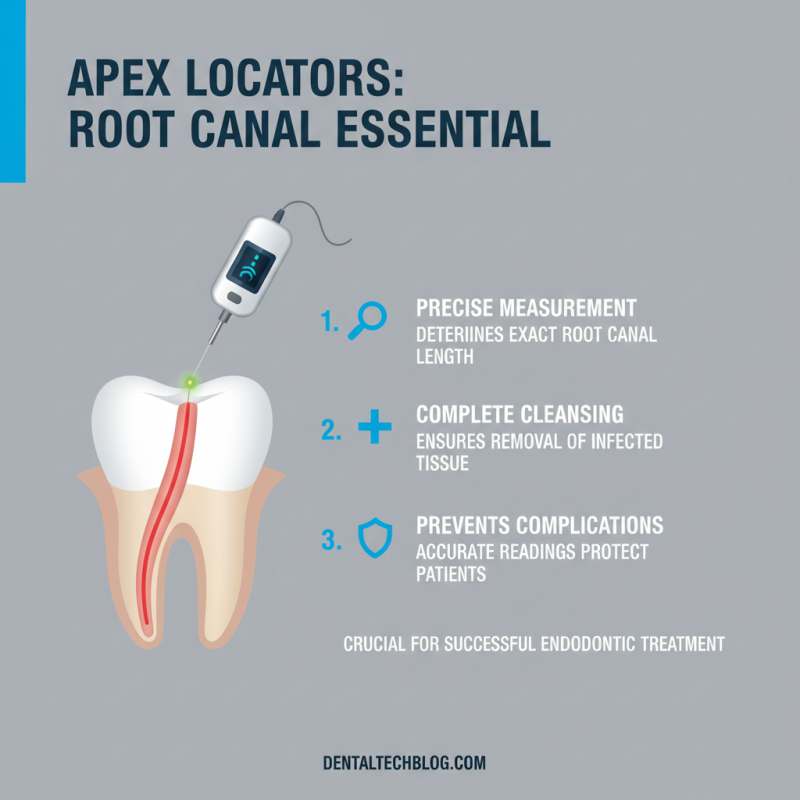
Apex locators are essential tools in root canal treatment. They help determine the exact length of the root canal. This measurement is crucial to ensure that the entire infected tissue is removed. Accurate readings can prevent complications during the procedure.
Using an apex locator can be tricky. It requires a good understanding of the anatomy of the tooth. Sometimes, factors like a curved canal or obstructive calcification can affect readings. It’s vital for dentists to remain observant and adjust techniques as needed.
**Tip**: Always calibrate your apex locator before use. This will help avoid errors.
Accurate readings lead to successful outcomes. However, be aware that apex locators are not foolproof. Clinicians should still rely on radiographs for confirmation. It's important to be thorough and not over-rely on technology.
**Tip**: Keep learning about the nuances of using an apex locator. Every case can be different.
The Role of Apex Locators in Determining Working Length
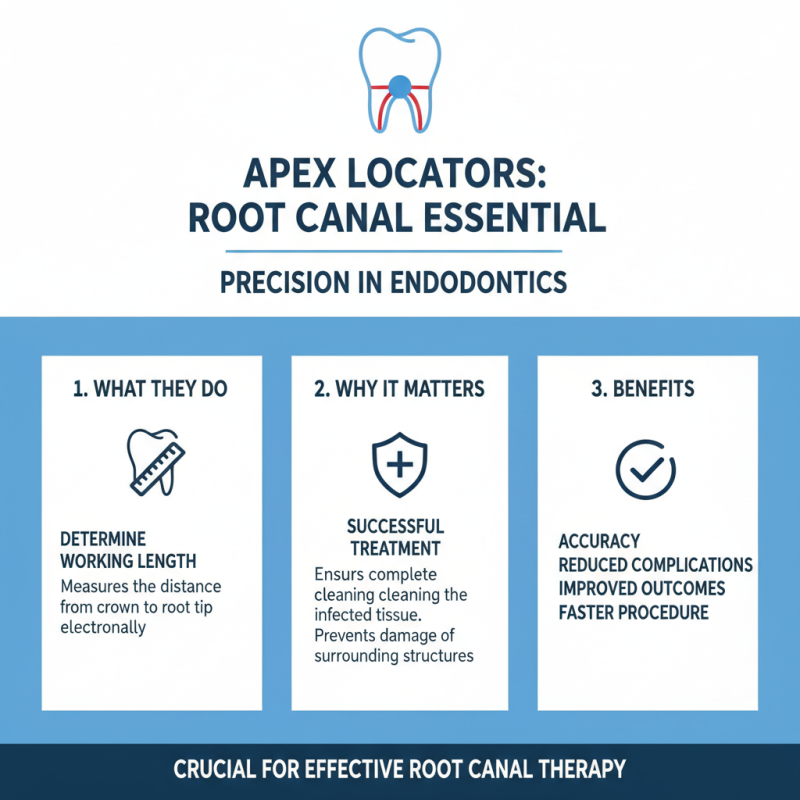
Apex locators play a crucial role in root canal treatment. They help determine the working length of the tooth, which is vital for successful therapy. Accurate working length ensures the complete removal of infected tissue and reduces complications.
An apex locator uses electronic measurements to identify the tooth's apex. This process gives dentists a real-time understanding of how far they can drill safely. Many practitioners now rely on these devices instead of traditional methods, like using a file or X-rays. While these tools increase accuracy, they are not infallible. Factors like tooth anatomy and the presence of dense bone can affect readings.
Relying solely on technology can lead to errors. A false reading might occur, causing incomplete cleaning or canal perforation. Therefore, it’s essential for dentists to combine apex locator data with clinical judgment. Careful consideration is necessary when interpreting the locator's findings. Thoughts on how to improve these techniques can help refine root canal procedures. Every case presents a learning opportunity.
Step-by-Step Instructions for Using an Apex Locator
Using an apex locator in root canal treatment can enhance precision. Start by ensuring the device is properly calibrated. This is crucial for accurate readings. Attach the patient’s electrode and the file to the apex locator. Make sure the connections are secure to avoid errors.
During the procedure, insert the endodontic file into the canal. Observe the apex locator’s screen closely. It should provide real-time feedback on the file's position. Sometimes, the readings can be off. If the locator indicates a reading that seems unusual, check the canal for blockages. In some cases, you may need to reposition the file.
When nearing the apex, look for consistent readings. These readings help determine the working length precisely. However, there can be discrepancies due to curved canals or file movement. Ensure to confirm your measurements with radiographs when needed. A good balance of technology and traditional methods can lead to better outcomes.
Troubleshooting Common Issues with Apex Locators
When using an apex locator, issues may arise that affect the treatment's accuracy. One common problem is faulty reading. This can stem from debris in the canal or improper placement of the file. If the device shows erratic readings, pause and check the file position. Ensure it's inserted as deeply as possible, and evaluate the canal for any obstruction.
Another frequent issue is signal loss. This usually indicates a poor connection between the apex locator and the file. Make sure the clips or leads are secure and free from damage. If you see inconsistent results, consider the patient's moisture level. Excessive fluid in the canal can interfere with the readings. Sometimes, turning the locator off and on can reset the connection as well.
Tips: Keep the equipment clean and well-maintained. Regular calibration helps maintain accuracy. Also, understand that every tooth may behave differently. Reflections on cases where things went wrong can improve your approach. Consider documenting these incidents; it fosters learning and enhances future treatments.
Usage of Apex Locators in Root Canal Treatments
Best Practices for Integrating Apex Locators in Treatment Plans
Integrating apex locators into root canal treatments can significantly enhance the precision of cleaning and shaping the canals. When planning treatment, consider the patient's unique anatomy. Each case is different. A detailed assessment helps determine the best strategy. Utilizing an apex locator allows for more reliable measurements of the root canal length. However, it's important to remain aware of possible discrepancies in readings. Factors like canal curvature or the presence of a foreign body can lead to errors.
Training and familiarity with the device are key to successful integration. It's helpful to practice using the locator on models before real applications. Understanding its function within the overall treatment plan is essential. Communication with the dental team about the findings is crucial. Yet, it's easy to overlook the importance of validating the apex locator's readings. Regularly cross-checking with radiographs can preserve accuracy. This helps prevent overextending or under-preparing the canals.
Reflecting on one’s approach to using apex locators is vital. Each treatment can yield unique challenges. It is necessary to adapt to these situations as they arise. Learning from each experience builds skill and confidence. The integration of apex locators should evolve over time, based on continuous feedback and observation. Embracing imperfections can lead to improved outcomes in future treatments.