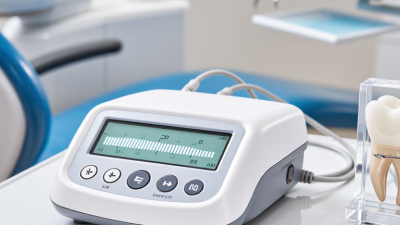
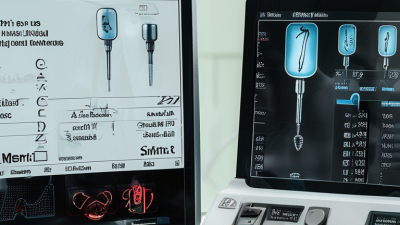
Choosing the best digital apex locator from China requires more than comparing prices or counting product features. The device must provide stable working-length readings in real clinical conditions. A narrow canal, curved root, blood, or excess irrigant can quickly expose weak performance.
Dr. Mahmoud Torabinejad has described the apex locator as “a valuable adjunct in determining working length.” That observation remains practical today. A digital apex locator should support clinical judgment, not replace it. Dentists should examine measurement stability, display visibility, file compatibility, calibration requirements, and performance near the apical constriction. Small details matter. A clear screen can reduce hesitation during treatment. A secure file clip can prevent interruptions. A reliable reading can save repeated radiographic checks.
Chinese manufacturers now offer compact devices with multi-frequency technology, rechargeable batteries, and affordable pricing. However, “best” is not universal. One model may perform well in moist canals but respond less consistently in retreatment cases. Another may offer excellent accuracy but provide limited technical support. Marketing claims also need careful review. Independent testing, clinical feedback, regulatory documentation, and warranty terms deserve attention.
There is no perfect locator.
Even experienced clinicians can encounter unstable readings. Patient anatomy varies, and technique still matters. This article compares leading Chinese options through a practical lens, focusing on accuracy, usability, durability, safety, and after-sales support. The goal is not to declare a winner too quickly. It is to identify the digital apex locator that fits specific clinical needs with the fewest compromises.
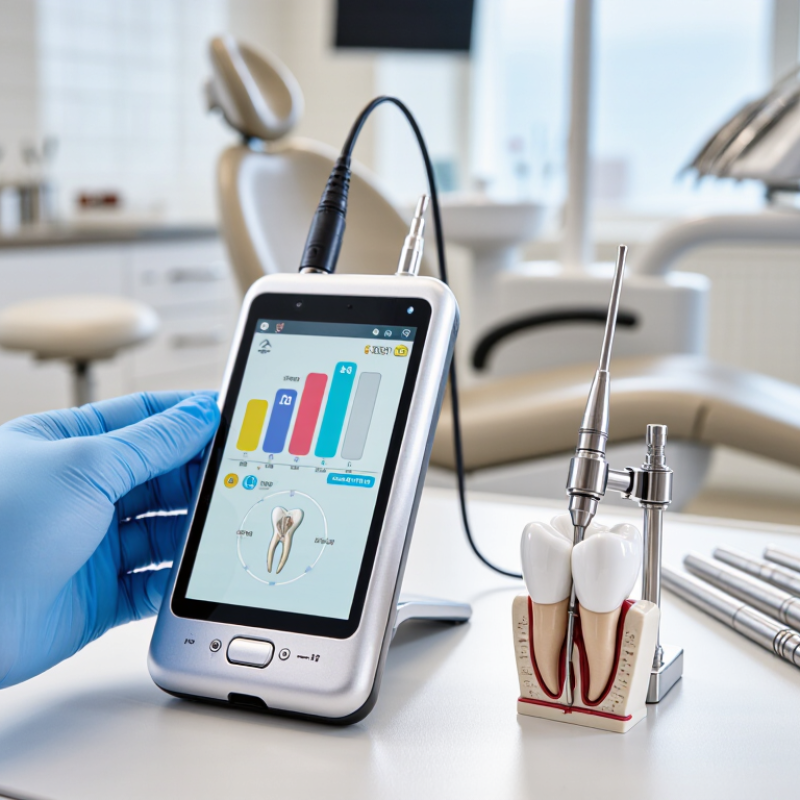
A digital apex locator estimates the working length of a root canal electronically. It does not take a picture. Instead, it measures electrical impedance between a file inside the canal and a lip clip.
As the file moves toward the apical foramen, the electrical signal changes. The device processes this change and displays a position on its screen. Modern multi-frequency systems can work through several canal conditions, but they are not infallible. Blood, excessive irrigant, metal restorations, open apices, and perforations may disturb the reading. A stable signal usually requires a suitable file, a dry chamber, and firm clip contact.
A reliable digital apex locator from China should be judged by evidence, not appearance. Look for clear instructions, calibration information, clinical testing, and complete regulatory documentation. In daily practice, clinicians should compare the electronic reading with tactile sensation and radiographic findings when needed. It is not magic. I still treat every measurement as an estimate, because canals rarely behave like textbook models.
Tips: Keep the pulp chamber reasonably dry, but avoid drying the canal aggressively. Touch the file carefully against the canal wall. If the reading jumps, pause and check the clip, file contact, and fluid level. Repeating the measurement is often wiser than trusting one perfect-looking number.
What Is the Best Digital Apex Locator from China?
Which Features Define a High-Quality Chinese Apex Locator?
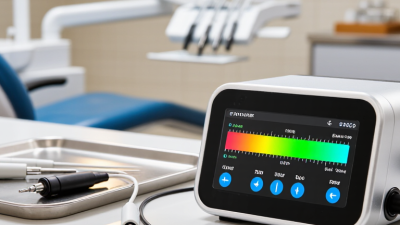
A high-quality Chinese apex locator should provide stable readings in wet canals. It must resist interference from blood, saline, and metal restorations. A clear color screen helps clinicians track the file position quickly. Audible signals also matter during microscope-assisted treatment. The device should include automatic calibration and a reliable file clip. These details reduce interruptions during working-length measurement.
Clinical evidence supports careful evaluation. Reviews published in the Journal of Endodontics commonly report electronic apex locator accuracy between 80% and 95% within 0.5 millimeters. Results vary with canal anatomy, irrigation, and measurement technique. The European Society of Endodontology also emphasizes radiographic and clinical verification, rather than trusting one reading blindly. A strong Chinese model should therefore offer stable repeat measurements, fast startup, and documented quality testing. Accuracy claims alone are not enough.
Tips: Test the unit in a prepared tooth model before clinical use. Check readings with different irrigants. Compare measurements with a confirmatory radiograph when anatomy looks uncertain. Ask for calibration records, electrical-safety reports, and service support. A compact design helps, but tiny buttons can slow treatment. I would not ignore that flaw. In real practice, usability often decides whether good technology performs consistently.
A practical, brand-neutral comparison framework for evaluating digital apex locators manufactured in China
| Evaluation Dimension | Recommended Quality Benchmark | Why It Matters Clinically | How to Verify It |
|---|---|---|---|
| Measurement Principle | Multifrequency impedance measurement, preferably using multiple alternating-current frequencies | Multifrequency systems generally handle changing canal conditions more effectively than simple resistance-based devices | Review the technical specification, circuit description, and independent performance documentation |
| Working Accuracy | Consistent readings within approximately ±0.5 mm under controlled laboratory conditions, with stated test methods | Reliable length estimation supports conservative shaping and helps reduce over-instrumentation risk | Request test results covering dry, moist, bleeding, saline, and irrigant-contaminated canal models |
| Apical Detection | Clear identification of the apical constriction and a stable “apex” indication rather than relying only on a numeric display | Visual and audible feedback can help clinicians recognize the approach to the working length | Check display behavior and audio changes while advancing a file through a standardized canal model |
| Moisture Tolerance | Stable readings in normal moist canals and in the presence of commonly used irrigants, within the manufacturer’s stated limits | Root canals are rarely completely dry during endodontic treatment | Compare readings in artificial canals containing saline, sodium hypochlorite, and excess fluid |
| Display and User Interface | High-contrast color screen, large file-position indicator, simple controls, and readable information from the operator’s working position | A clear interface reduces distraction and supports real-time file positioning | Assess viewing angle, brightness, menu logic, and operation while wearing gloves and a face shield |
| Audible Guidance | Adjustable volume and distinct tones for progression, proximity to the apex, and overextension | Audio signals allow the clinician to monitor the file while maintaining visual focus on the operating field | Test tone differences, volume control, and mute functions during simulated procedures |
| Calibration and Stability | Automatic startup checks, stable readings, and no routine manual calibration requirement unless specified in the instructions | Stable electronics reduce interruptions and inconsistent measurements between patients | Run repeated measurements with the same setup and record drift, interruptions, and error messages |
| File and Clip Connection | Secure, autoclavable lip hook and file clip with low contact resistance and easy replacement | Reliable accessories help maintain electrical continuity and infection-control compliance | Inspect connector fit, test continuity, and confirm sterilization instructions for reusable parts |
| Battery Performance | Rechargeable battery, practical multi-session operating time, battery-status display, and overcharge protection | Predictable power availability is important for daily clinical workflow | Check operating time, charging duration, battery replacement policy, and charger certifications |
| Safety and Electrical Protection | Low-voltage battery operation, electrical isolation, protected charging, and documented applicable safety testing | Appropriate electrical protection is essential for equipment used near patients and fluids | Review conformity documents, risk-management records, electrical-safety reports, and instructions for use |
| Infection Control | Smooth, wipeable housing and removable accessories that can be sterilized according to validated instructions | Good cleanability helps reduce cross-contamination risk between patients | Verify chemical compatibility, autoclave limits, replacement intervals, and cleaning workflow |
| Durability | Impact-resistant enclosure, sealed controls, dependable connector design, and documented environmental operating limits | Dental equipment is exposed to drops, disinfectants, vibration, and repeated daily handling | Request drop, ingress, chemical-resistance, and operating-temperature test information where available |
| Regulatory Documentation | Traceable technical file, risk analysis, quality-management documentation, labeling, and market-specific conformity evidence | Documentation supports legal distribution, purchasing confidence, and post-market accountability | Confirm document validity, product-model consistency, authorized importer details, and applicable regional requirements |
| After-Sales Support | Written warranty, spare-accessory availability, repair process, training materials, and responsive technical support | Service quality affects total ownership cost and minimizes downtime | Obtain warranty terms, spare-part prices, response-time commitments, and service contacts before purchase |
Choosing a digital apex locator from China requires more than comparing prices or display designs. The WHO Global Oral Health Status Report 2022 estimates that 2.5 billion people have untreated caries in permanent teeth. This demand increases pressure on clinics to obtain reliable endodontic equipment.
Start with clinical evidence. Ask manufacturers for accuracy studies performed in curved, wet, and partially obstructed canals. Modern electronic apex locators often report accuracy within ±0.5 mm, but results can change with irrigants and apical anatomy. A polished brochure is not enough. I would request raw test data, sample sizes, failure rates, and the testing protocol.
Check quality systems carefully. ISO 13485 certification supports controlled manufacturing, while IEC 60601-1 and IEC 60601-1-2 testing addresses electrical safety and electromagnetic compatibility. Verify registration documents through the relevant Chinese medical-device authority. Then examine production details: probe durability, battery replacement, screen visibility, calibration procedures, and batch traceability.
Service quality matters.
Compare warranty length, repair turnaround, software updates, and spare-part availability. Request a demonstration unit and test it beside a trusted device. Notice whether readings remain stable after irrigation. Some suppliers provide excellent samples but inconsistent later batches. That possibility deserves direct questioning.
Professional buyers should also review export experience, technical training, and complaint-handling records. Industry forecasts continue to show growth in digital dentistry, yet market growth does not guarantee clinical reliability. The best manufacturer is the one that proves repeatable performance, documents limitations honestly, and supports dentists after delivery.
A reliable Chinese apex locator should meet recognized safety and performance requirements, not only offer a low price. Look for electrical safety testing under IEC 60601-1 and electromagnetic compatibility testing under IEC 60601-1-2. The device should also have documented biocompatibility evidence for patient-contact materials, where applicable. Regulatory registration in the target market is essential, but registration alone does not prove clinical accuracy.
Testing should include repeatability, measurement stability, and performance in realistic canal conditions. Independent evaluators can test extracted teeth with different canal lengths, curvatures, moisture levels, and irrigants. Results should be compared with direct working-length measurements under magnification. A dependable unit should perform consistently, even when the canal is wet or partially filled. No bench test perfectly copies clinical treatment. That limitation deserves honest discussion.
Ask for complete test reports, not only certificates. Check the testing laboratory, report date, sample numbers, and acceptance criteria. Request data from repeated measurements, including failed or uncertain readings. Verify calibration procedures and software updates. A useful supplier should explain storage conditions, cleaning instructions, battery safety, and service support clearly. I would also test several units from different production batches. One sample can look excellent by chance. That may sound overly cautious, but clinical decisions deserve more than attractive specifications.
Choosing the best digital apex locator for your dental practice requires more than comparing screen designs or advertised accuracy. The WHO Global Oral Health Status Report (2022) estimates that nearly 3.5 billion people live with oral diseases. Efficient endodontic treatment therefore depends on dependable working-length control, especially in busy clinics.
Look for stable readings in moist canals, clear audio signals, and a display visible from the operating position. A systematic review published in the Journal of Endodontics reported that modern electronic apex locators commonly achieve about 90% accuracy within 0.5 millimeters, although results vary with open apices, perforations, resorption, and excessive fluids. Accuracy is conditional. I would test the device with several canal types before purchasing. Ask for independent validation, not only factory data. Confirm NMPA registration, ISO 13485 quality management, electrical safety documentation, and service support in your region.
Battery life also matters. A device that shuts down during treatment creates unnecessary interruptions. Check calibration procedures, probe durability, file-clip stability, and replacement costs. Some lower-priced Chinese manufacturers offer strong specifications, but documentation quality can differ considerably. That difference matters. A reassuring screen can still mislead when the canal is unusually wet or anatomically complex. Combine the locator with radiographic assessment and clinical judgment, following accepted endodontic guidance. The best choice is not always the most advanced model. It is the one your team can verify, maintain, and use consistently.
DENTSPLY Maillefer - USA
5100 E. Skelly Drive, Suite 300
Tulsa, Oklahoma 74135
DENTSPLY Maillefer - Canada
161 Vinyl Court
Woodbridge, ON L4L 4A3
Toll-free in the U.S.:
1-800-924-7393
Toll-free in Canada:
1-800-263-1437
Toll-free in the U.S.:
1-800-924-7389
Toll-free in Canada:
1-888-336-8775