Choosing an apex locator is not simply a matter of selecting the newest device. Global buyers must compare measurement stability, operating conditions, sensor design, software feedback, and after-sales support. A unit that performs well in a dry canal may respond differently in a bleeding or irrigated canal. Small details matter. Probe grip, file compatibility, display visibility, and battery access can influence daily clinical efficiency.
Dr. Yoshi Terauchi, a widely cited endodontic researcher, has emphasized, “An apex locator is not a substitute for clinical judgment; it is a guide that improves it.” This principle remains important when evaluating each apex locator generation. Modern models may use multifrequency impedance, adaptive algorithms, color displays, or integrated motor control. However, advanced features do not guarantee accurate decisions in every canal. Calibration, user training, and radiographic confirmation still deserve attention.
This guide compares the top ten apex locator types for international buyers. It examines practical differences between traditional resistance-based units, modern multifrequency systems, compact wireless models, and combined endodontic motors. Each category is considered through a buyer’s lens: accuracy, repeatability, ergonomics, maintenance, certification documentation, and total ownership cost. Some comparisons remain imperfect because clinical outcomes depend on anatomy and technique. That limitation should be acknowledged, not hidden. A device showing a stable reading beside a molar chair is useful; a clear service policy and dependable distributor may be equally valuable. The best choice is therefore not always the most expensive one. It is the model that fits the clinician, procedure, and working environment.
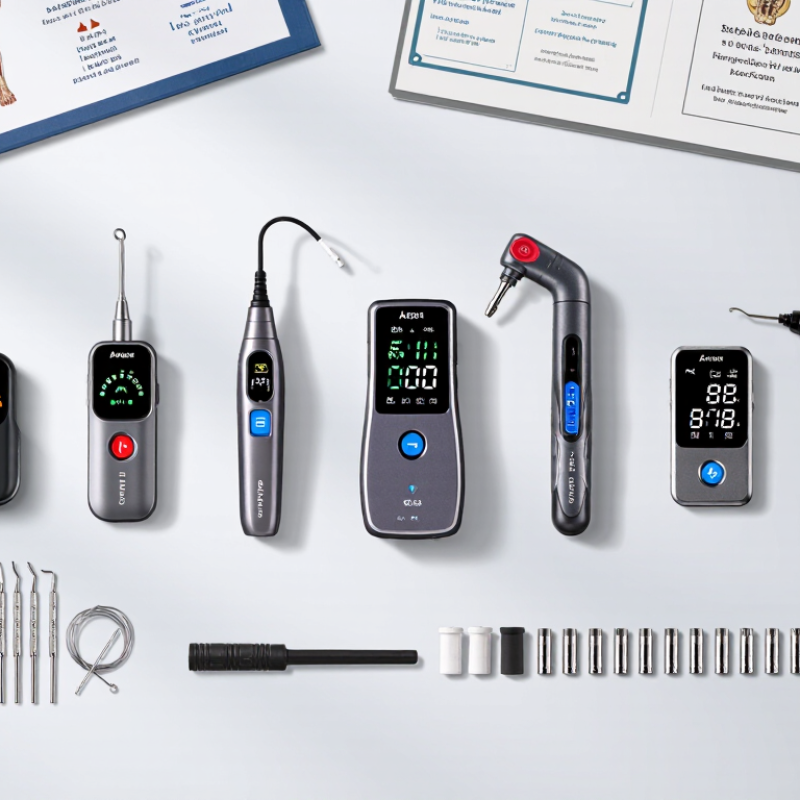
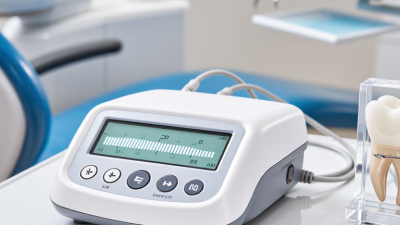
An apex locator is an electronic device used to estimate a tooth’s working length. It helps identify the position of the file tip near the apical foramen. Accurate working length supports effective cleaning, shaping, and filling of the root canal.
The device measures changes in electrical resistance or impedance between the file and an oral electrode. As the file advances, its signal changes inside the canal. Modern multi-frequency systems can often function in moist canals, where older designs were less dependable. However, canal contents still matter. Excessive bleeding, conductive restorations, or an open apex may distort the reading.
A stable reference point is essential. Clinicians should place the file carefully, confirm the coronal reference, and repeat the measurement when the reading shifts. A small silicone stop can make this process more consistent. Radiographic imaging remains useful, especially in curved, calcified, or anatomically unusual canals. It does not replace electronic measurement, but it can reveal a poor file position.
The display is not an unquestionable answer. Even experienced clinicians can misread a fluctuating signal. That is an important weakness. The best result usually comes from combining the locator reading, tactile feedback, clinical judgment, and appropriate imaging. Different apex locator types may use different signal-processing methods, but their practical value depends on correct setup and disciplined interpretation.
Global buyers can choose from ten practical apex locator types: resistance, single-frequency impedance, dual-frequency, multifrequency, frequency-ratio, capacitance, adaptive, self-calibrating, wireless portable, and motor-integrated systems. Their shared purpose is estimating the apical foramen without relying on radiographs alone. Resistance models are simple, but moisture can affect readings. Multifrequency and adaptive systems usually manage changing canal conditions better.
The American Association of Endodontists recommends combining electronic measurements with clinical judgment and imaging when needed. A systematic review in the Journal of Endodontics also found that modern electronic apex locators commonly achieve measurements within about 0.5 mm of the apical foramen, though results vary by study design. The WHO Global Oral Health Status Report 2022 estimates that 2.5 billion people have untreated caries in permanent teeth. That burden supports demand for dependable endodontic equipment across clinics and markets. Still, no type wins every canal. Narrow, wet, curved, or perforated canals can produce uncertain readings.
Tips: Match the locator to your canal mix, not its feature count. Test files in a moist canal, confirm the reading remains stable, and keep a radiographic option available. I prefer clear alerts and easy calibration over impressive specifications. Buyers should also check training support, consumable availability, and local service coverage. These details are less exciting, but they often decide daily reliability.
| No. | Apex Locator Type | Core Measurement Principle | Typical Clinical Use | Main Advantages | Main Limitations | Performance Position | Key Buyer Considerations |
|---|---|---|---|---|---|---|---|
| 1 | Direct-Current Resistance Locator | Measures electrical resistance between the endodontic file and the oral mucosa. The canal is treated as part of an electrical circuit. | Historical or basic endodontic applications where the canal is relatively dry and electrically stable. | Simple circuit design, straightforward operating concept, and potentially low equipment cost. | Highly affected by canal moisture, irrigants, blood, metallic restorations, and contact with periodontal tissues. It may provide unstable readings in wet canals. | Legacy / limited | Usually unsuitable as the only measurement method for modern routine practice. Check whether local regulations permit clinical use and whether replacement accessories remain available. |
| 2 | Single-Frequency Impedance Locator | Applies an alternating electrical signal at one frequency and evaluates impedance changes as the file moves toward the apical region. | Routine working-length estimation in canals with controlled irrigation and appropriate isolation. | More reliable than direct-resistance designs and less dependent on a perfectly dry canal. | Readings can still be influenced by conductive fluids, open apices, perforations, large apical foramina, and accidental file contact with metal. | Basic modern | Confirm the specified operating frequency, measurement algorithm, display behavior, file compatibility, and performance with commonly used irrigants. |
| 3 | Dual-Frequency Impedance Locator | Uses two alternating frequencies and compares the impedance response at each frequency to estimate the file position. | General root-canal treatment, including many canals containing residual moisture or irrigating solution. | Improved compensation for changing canal conditions compared with many single-frequency systems; commonly offers stable progressive readings. | Accuracy can decrease in cases with apical resorption, perforation, immature apices, or an unusually wide foramen. | Established | Evaluate calibration requirements, audio and visual alerts, battery type, display readability, and documented testing under wet-canal conditions. |
| 4 | Multi-Frequency Impedance Locator | Analyzes impedance across multiple frequencies to distinguish the file position from variations in canal contents and tissue conditions. | Broad routine use across vital, necrotic, wet, partially dry, and anatomically variable canals. | Good adaptability to changing electrical conditions and generally strong resistance to interference from common irrigating fluids. | More complex electronics and software may increase purchase price, repair requirements, and operator-training needs. | Advanced / widely preferred | Compare the number of measurement frequencies, validated accuracy data, firmware support, service capability, and availability of compatible file clips and lip hooks. |
| 5 | Ratio-Based Impedance Locator | Calculates a ratio or mathematical relationship between impedance values measured at different frequencies rather than relying on one absolute reading. | Working-length estimation where canal moisture and electrolyte concentration vary during instrumentation. | Can reduce the effect of certain environmental changes and provide a more consistent signal than a single absolute impedance value. | Results depend on algorithm quality, electrode contact, canal anatomy, and correct setup. The term may describe software functionality rather than a separate hardware category. | Advanced algorithmic | Request independent validation, operating-condition limits, error indications, and instructions for use with sodium hypochlorite, saline, and other common solutions. |
| 6 | Adaptive-Frequency Locator | Automatically selects or adjusts the measurement frequency according to the electrical conditions detected in the canal. | Complex or changing canals where moisture, pulp remnants, debris, or irrigants may vary during treatment. | Can maintain a usable signal across a wider range of canal conditions and reduce the need for manual frequency selection. | “Adaptive” is not a globally standardized technical classification; actual performance depends on the manufacturer’s algorithm and validation quality. | Advanced / variable | Look beyond marketing terminology and request technical documentation showing the sensing method, error tolerance, testing protocol, and behavior in difficult clinical conditions. |
| 7 | Capacitance-Resistance Combination Locator | Combines capacitance-related and resistance or impedance-related electrical information to estimate progression toward the apical constriction. | Specialized systems intended to improve discrimination between canal position and surrounding periodontal tissues. | May provide additional signal information and can support stable readings when one electrical parameter alone is insufficient. | Less common terminology, limited interchangeability between designs, and potentially less independent clinical evidence than mainstream impedance systems. | Specialized | Verify peer-reviewed evidence, user training requirements, compatibility with isolation techniques, and the availability of local technical support and consumables. |
| 8 | Standalone Corded Apex Locator | Usually uses impedance-based electronics in a separate tabletop or chairside unit connected to a file clip and lip hook. | High-volume endodontic practices, dental schools, and clinics that prefer a dedicated working-length device. | Stable power supply, typically larger display controls, easy repositioning between treatment units, and no dependence on a handpiece battery. | Requires cable management and chairside space. It is not integrated with rotary or reciprocating instrumentation. | Practical / dependable | Check power-input requirements, plug and adapter standards, electrical safety certification, cable durability, screen visibility, and warranty service in the target country. |
| 9 | Standalone Cordless Apex Locator | A battery-powered electronic apex locator uses impedance, multi-frequency, or adaptive measurement technology without a permanent mains cable. | Mobile dental rooms, multi-chair clinics, field environments, and practices requiring flexible chairside placement. | Portable, uncluttered, easy to move between operatories, and useful where mains power is inconsistent. | Requires battery charging or replacement; low battery levels, charging failures, and long-term battery degradation can interrupt use. | Flexible / widely used | Compare battery chemistry, charging time, expected operating cycles, USB or proprietary charging, ingress protection, transport requirements, and replacement-battery availability. |
| 10 | Integrated Apex Locator and Endodontic Motor | Combines electronic working-length measurement with rotary or reciprocating file control, often allowing automatic apical slowdown or stop functions. | Instrumented root-canal procedures where working-length feedback and mechanical preparation are performed in one workflow. | Fewer separate devices, coordinated file movement and measurement, improved chairside organization, and potentially smoother operator workflow. | Higher system cost, greater software and maintenance complexity, dependence on compatible handpieces or files, and possible disruption if one module requires service. | Integrated / premium | Assess motor torque and speed ranges, reciprocation profiles, file-library update policy, cross-border service, calibration procedures, electrical certification, and backup options. |
| Buyer note: Electronic apex locators estimate the position of the apical constriction or apical foramen; they do not replace radiographs, clinical judgment, adequate isolation, or confirmation of canal anatomy. Accuracy varies with apical resorption, perforation, immature or wide apices, canal moisture, file position, and electrode contact. Performance data should be compared using the same clinical endpoint and test conditions. | |||||||
Apex locators differ mainly in measurement method, stability, and handling. Resistance-based models are simple and affordable, but canal moisture can affect readings. Impedance-based designs respond better to changing conditions. Frequency-based systems use electrical signals to estimate file position. Multi-frequency models compare several signals and often perform well in wet canals. Ratio-based units calculate relationships between measurements, improving consistency in difficult anatomy.
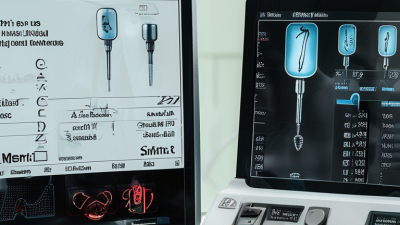
Adaptive systems adjust their readings during canal changes. Automatic-calibration models reduce setup errors and support faster chairside use. Integrated motor-locator systems combine working length control with instrumentation. Wireless models improve movement around the treatment area, although battery management becomes important. Compact display units suit limited spaces, while larger screens may improve visibility through gloves and protective barriers. Small details matter.
Clinical experience shows that no type wins every case. Narrow, curved canals can challenge even advanced electronics. That assumption needs testing. Look for stable readings, clear audio or visual alerts, file compatibility, and simple disinfection procedures. The device should maintain performance when the canal contains irrigant, blood, or limited moisture control. Independent testing and regulatory documentation deserve careful review. A low purchase price may hide replacement probes, calibration needs, or short battery life. Training also affects accuracy. A technically advanced locator can still produce doubtful results when the operator ignores reference points or confirms measurements poorly. Expect variation, and record why.
This comparison summarizes the typical technical capabilities associated with ten apex locator types. A score of 1 indicates that the feature is generally associated with the technology, while 0 indicates that it is not a defining feature. Actual performance can vary by device design, calibration, canal anatomy, moisture level, and clinical technique.
Choosing among the top ten apex locator configurations requires more than comparing screen size or advertised accuracy. Resistance-based units are simple, but they may be less reliable in wet canals. Impedance-based models measure electrical changes and can support routine working-length estimation. Frequency-dependent systems use one or several signals, while multifrequency designs often perform better under changing canal conditions. Dual-frequency units are practical for complex cases. Adaptive models can adjust readings when moisture levels shift. Some devices include automatic calibration, reducing setup errors. Others combine apex measurement with an endodontic motor, saving clinical space. Wireless systems improve mobility, but battery checks become essential. File-monitoring configurations may offer useful visual control, although their displays can distract inexperienced users.
Clinical evidence should guide purchasing decisions. In my experience, isolation, coronal access, file size, and operator technique affect results as much as device design. No locator replaces a confirmatory radiograph when anatomy remains uncertain. Small displays can be hard to read through protective eyewear. That detail is easy to overlook.
Technical evaluation should include measurement stability, file compatibility, battery life, cleaning resistance, alarm controls, and electromagnetic compatibility. International buyers should request current quality certificates, validation data, instructions for use, and service records. Regulatory requirements differ across markets. Check electrical safety, labeling, language, importer responsibility, and local registration before ordering. A certificate alone does not prove clinical suitability. Also, published performance data may not represent every canal condition. Build a trial period into the decision. Mistakes happen. A careful review is still cheaper than replacing unsuitable equipment.
Top 10 Apex Locator Types Compared for Global Buyers
How to Choose an Apex Locator for Different Practice Needs
Choosing an apex locator starts with canal conditions, not the highest specification. Multi-frequency and dual-frequency models usually perform better in wet canals, retreatment cases, and variable electrolytes. Simple impedance-based units may suit routine cases and smaller budgets. However, accuracy can decline near open apices, perforations, resorption, or excessive bleeding. Systematic reviews in the Journal of Endodontics commonly report 80–95% accuracy within ±0.5 mm, depending on the device and testing method. That range is useful, but not absolute.
A busy general practice may need fast calibration, clear audio signals, and a stable file clip. Endodontic specialists may value multi-frequency measurement, memory functions, and compatibility with rotary workflows. Pediatric clinics should consider small files, simple controls, and gentle alarms. European Society of Endodontology guidance supports electronic working-length measurement, with radiographic verification when clinical conditions remain uncertain. I would not treat a 95% result as certainty. That assumption can fail.
Tips: Test the unit with your usual irrigants before purchase. Check performance in dry, wet, and curved canals. Ask for independent validation, not only sales data. Review the study sample, canal model, and accuracy tolerance. Battery life matters during long procedures. A bright display helps under protective lighting. Also, staff training should be included in the buying plan. A technically advanced device can still produce poor results when users rush, skip calibration, or ignore unstable readings.
DENTSPLY Maillefer - USA
5100 E. Skelly Drive, Suite 300
Tulsa, Oklahoma 74135
DENTSPLY Maillefer - Canada
161 Vinyl Court
Woodbridge, ON L4L 4A3
Toll-free in the U.S.:
1-800-924-7393
Toll-free in Canada:
1-800-263-1437
Toll-free in the U.S.:
1-800-924-7389
Toll-free in Canada:
1-888-336-8775